When our complex was built back in the late 1990s, a type of internal water-supply pipe called Poly-B was considered the standard for plumbing in new home construction. Today it represents a severe risk for every owner. Here’s why and some options for avoiding disaster.
Polybutylene water-supply pipe (often called Poly-B in Canada) took off in the late 1970s through the 1980s and even into the early 1990s because it solved several common pain points of the time.
Copper was already very expensive, and with builder margins small, Poly-B could cut the cost of plumbing by 50%, saving thousands of dollars for the average townhouse.
In addition, because it is much lighter in weight and flexible, it was easier to install. Plumbers could snake long runs of it with fewer fittings and less labour. It was marketed as modern and durable, thus becoming widely adopted across North America.
Why it’s now considered a bad choice
The core problem is that many Poly-B systems don’t just fail from age. They degrade because of the basic chemistry of water, especially municipal water supplies.
- Oxidative attack from disinfectants: chlorine and other oxidants used in municipal water treatment can make the pipe material and/or fittings deteriorate over time, leading to brittleness and micro-cracking.
- Fitting vulnerabilities: many Poly-B systems used acetal (plastic) insert fittings that can fail prematurely, causing leaks and damage. Fortunately, the builders of the Windsor Garden complex invested in a higher quality approach and utilized copper elbows which reduce this risk. But the other risks remain.
- Real-world pattern of leaks: insurers and inspectors began noticing a pattern by the mid-1980s, and the material fell out of favour. In Canada, Poly-B was later removed from acceptance in the National Plumbing Code context.
Today, Poly-B is widely treated as a high-risk, end-of-life system even if it’s not currently leaking. In fact, some insurance providers are taking this so seriously they are not even insuring properties that use Poly-B piping, or they may increase insurance rates substantially due to the high risk of failure.
Leaks can be sudden—or slow and hidden
Some failures are dramatic bursts, but many are slow leaks inside walls/ceilings, discovered only after water damage or mould has started.
Failures tend to cluster
Once an area starts leaking, it can be a sign the system is aging/embrittling more broadly—so you may see repeat leaks (not always, but often enough that plumbers/insurers treat it as systemic risk).
Insurance and resale friction
Some insurers surcharge, restrict, or decline coverage, and Poly-B can become a negotiation point in a sale. For example, you may face replacement credits, conditions, or required upgrades.
“Partial repairs” can be a trap
Replacing one leaking segment doesn’t remove the underlying risk in the remaining PB runs and fittings. As a result, you may spend money repeatedly and still worry about the next failure.
How to minimize risk to homes that have Poly-B
Naturally, a full replacement is the best choice but that involves tearing open internal walls with a corresponding investment that can easily reach $12,000 to $15,000. If full replacement isn’t immediately possible, these steps can meaningfully reduce the chance/severity of a loss:
Reduce stress on the system
Control water pressure: high pressure accelerates failure risk in weakened plastics—use/verify a pressure-reducing valve (PRV) and consider a pressure gauge check.
Manage hot-water stress. Reduce the water temperature at your hot water tank, because heat can worsen material stress over time (especially in hot chlorinated water systems).
Reduce damage if something does leak
Install automatic leak detection + auto shutoff. This is a whole-home shutoff valve with water leak sensors placed in strategic locations throughout your home.
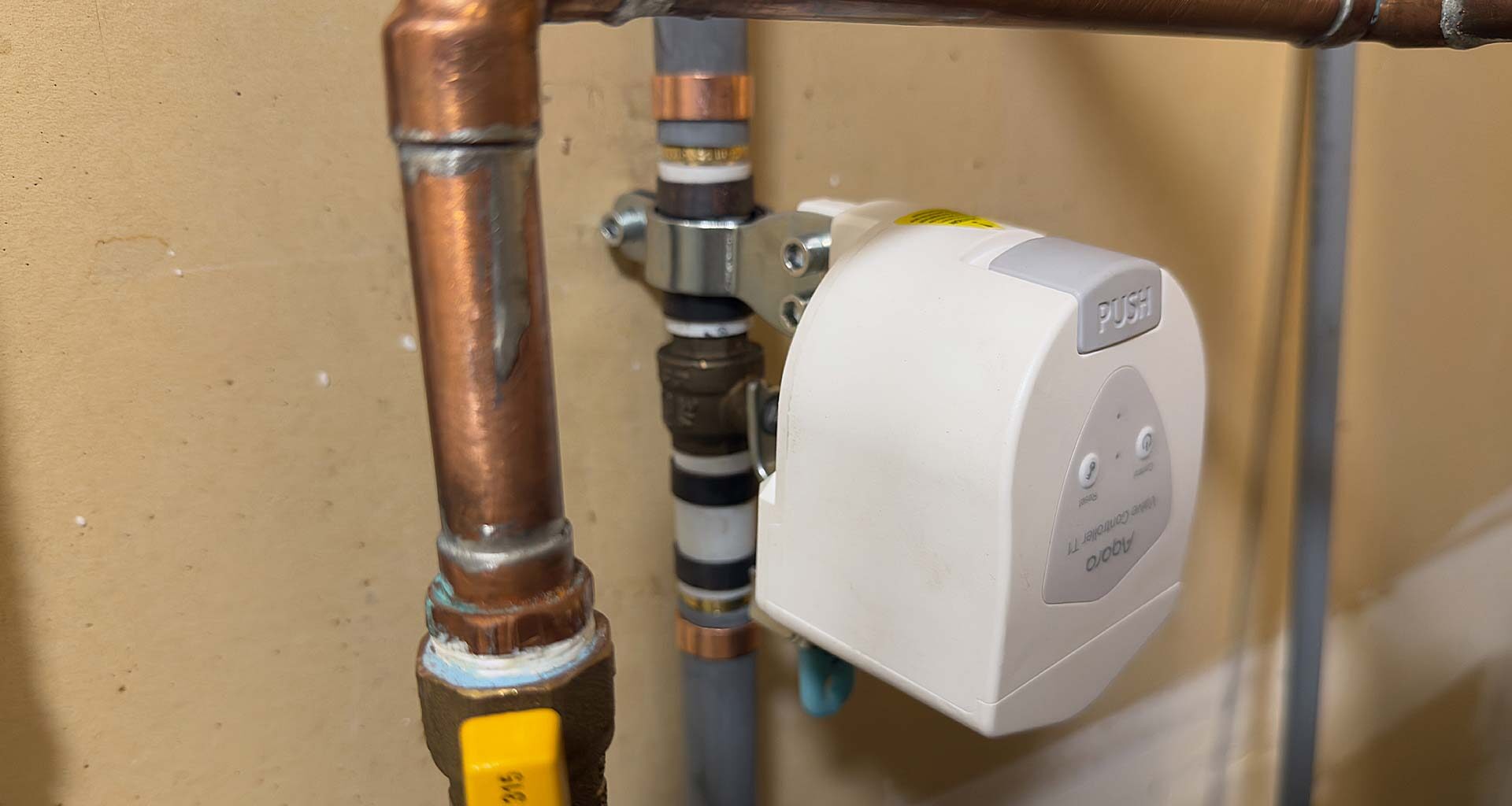
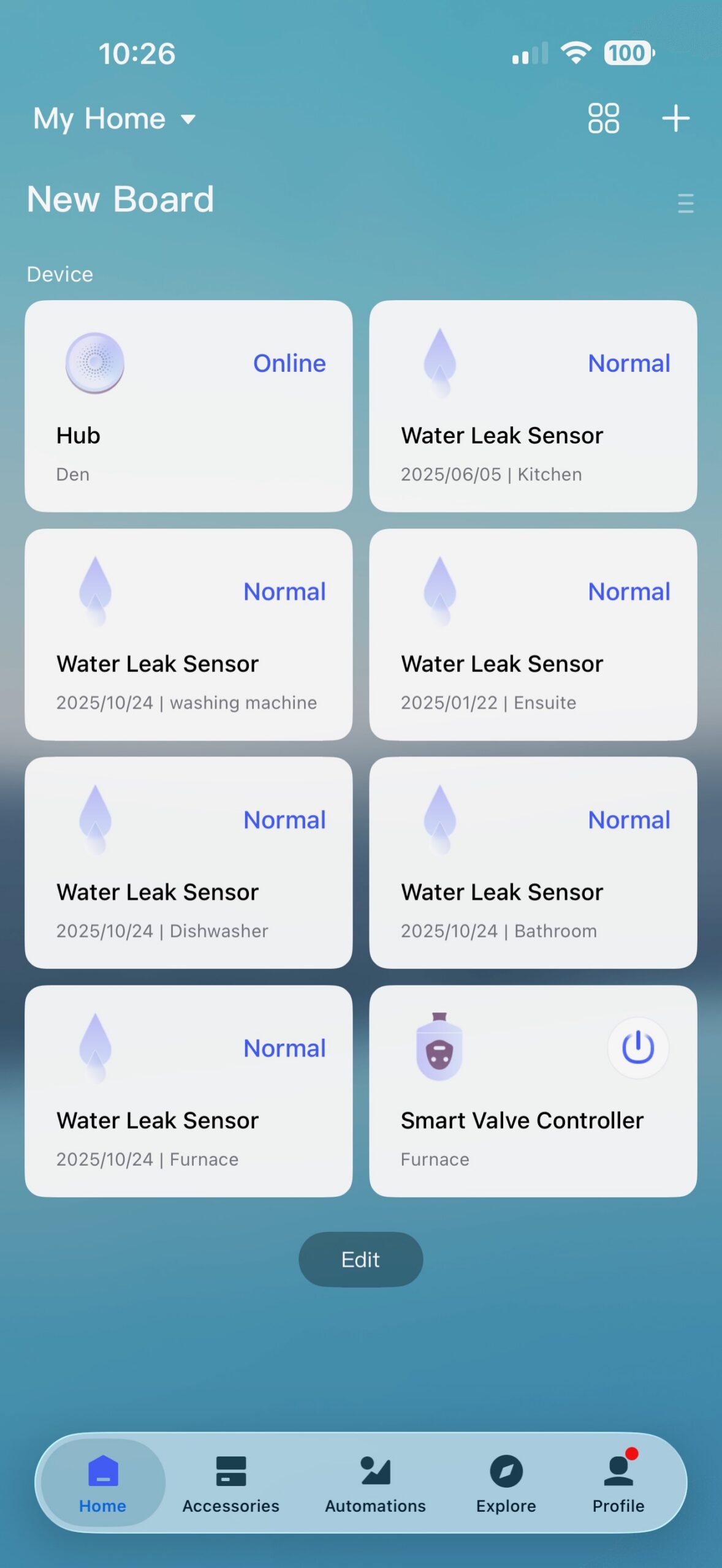 I’ve installed a system called Aqara, along with 6 individual sensors. These are tiny pucks not much larger than an Apple Airtag that connect through wifi to a base station. When any of the sensors detect a water leak, an alarm goes off and the main unit attached to your incoming water valve automatically engages to shut off the water. A photo of the valve unit is shown at the top of this post.
You also get an immediate alert on your mobile phone. The whole system, including installation, cost about $750. This doesn’t stop a failure, but it can turn what would be a catastrophe into a small repair.
I was inspired to install this system when a friend who lives in another townhome on Smith Crescent had a water leak of his Poly-B piping while he was overseas on vacation. He had no way of knowing and once he learned of it, the damage had already extended to his neighbour’s property. Worse, despite knowing about it, nobody could enter his property for some time, since he was away. The damage was catastrophic. It took two full years to resolve with the insurance company, with him being unable to occupy his property for much of that time.
If you are interested in such a system, get in touch and I’ll refer you to my plumber who is an expert at installing Aqara valve systems.
Partial replacement. Replace old, failure-prone hoses and valves (toilets, laundry) and keep the main shutoff accessible.
Monitor the highest-risk locations
Regularly inspect visible Poly-B near the water heater, under sinks, and at manifolds for discoloration, flaking/chalking, stress marks, or weeping at fittings.
Have a plumber identify the system and fittings. Poly-B is often marked “PB2110” (though markings aren’t always easy to find).
Consider water treatment
My plumber suggested that we can use water filtration to reduce oxidants and chemistry driving degradation. Our water here in BC is very hard, which further accelerates the damage to the Poly-B pipes. Adding a water softener could help somewhat, and it’s pretty affordable at only a couple hundred dollars plus the service charge from your plumber. Keep in mind that it’s not a guaranteed fix and won’t reverse existing aging.
The most reliable solution: plan a full repipe
The consistently recommended “sleep-at-night” fix is full replacement (commonly to PEX). Many Canadian guidance notes emphasize Poly-B is no longer an acceptable material and is best replaced proactively rather than waiting for a failure.
As mentioned earlier, repiping your entire unit is an expensive proposition, but some owners in our complex have already chosen that route. If you choose to do this, you need approval from the Strata Council, but it’s a simple ask and the submission of an Assumption of Liability form.
This post is also available in: