People do all kinds of things when they get ready to sell in an effort to increase the value of their property. But they often miss the most important element of all, which is also the cheapest.
Have you ever noticed how homeowners go nuts with renovations when they are getting ready to sell? They’ll upgrade floors, and the kitchen, and the bathrooms. They will spruce up all kinds of things on the inside of the home. Nothing wrong with that, of course. Many of these things do increase perceived value.
What’s sad is that they often miss the single most important element that affects the perceived value of the home. It’s something that hits the potential buyer before they ever set foot inside the home. In fact, in much the same way people judge a person within three seconds of meeting them, they judge a home in about the same amount of time. In the case of Windsor Garden, that impression happens when they are still finding a parking space.
Curb appeal.
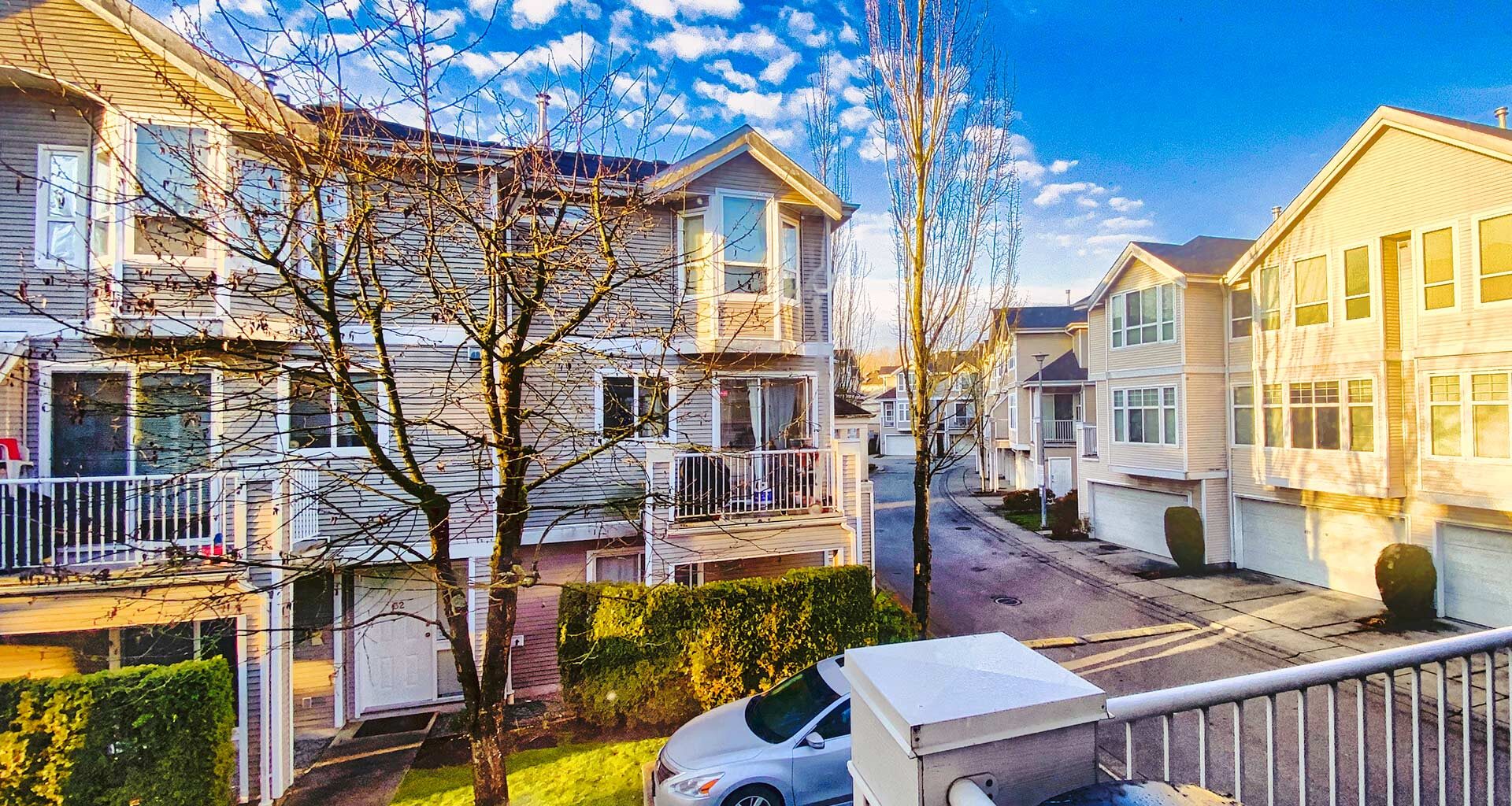
It’s the initial impression that happens when people drive through our complex, and when they are still walking from their car to your door. This refers to all the small details that many homeowners don’t even notice, simply because residents are used to them. The condition of the paint on wooden steps. The nicks and cracks on the door posts. The green algae on the concrete walkway or steps. The dirt caked on the siding from that horrible freeway tire dust constantly floating through our community.
These things tend to become invisible to owners because we see them every day. Yet they make a huge impression on first-time visitors to the complex.
There is plenty of real-world research on the financial impact of curb appeal, and several studies have attempted to quantify it into exact numbers. Let’s dig in and take a closer look at how much curb appeal alone can impact the value of your property.
The Biggest Curb Appeal Drivers (by ROI)
Studies consistently identify the following elements as those having the greatest impact on perceived value by a potential buyer:
- Landscaping maintenance
- Exterior paint / siding repair
- Clean walkways and pressure washing
- Front door and entryway appearance
- Lighting
- Trim / fascia repair
- Mature trees
These improvements can generate the highest ROI in home value. Unfortunately, some past strata councils have not been proactive in focusing on regular maintenance, choosing instead to be reactive. As a result, some areas have fallen behind. For example, while some stairs have been replaced, others have not. Washing of siding was neglected for years until 2022, and even then only part of the complex was actually cleaned.
Owners have not helped. At past AGMs they have often rejected budgets that would increase maintenance to where we could make the improvements necessary. I prefer to think that this was due to ignorance of how important it is to maintain a visually pleasing first impression of our complex. Perhaps the facts presented here can help change some viewpoints.
Real-World Economic Impact
So how much difference does it actually make, in dollars and cents, to improve curb appeal in a complex like ours?
Real-world research consistently shows curb appeal has measurable economic impact, with a 5–7% average price premium overall. Landscaping improvements add a 5–12% increase.
In contrast, bad curb appeal can reduce value significantly, with the effect more pronounced on townhomes in the 25-30 year age category, like ours. This happens because buyers are already aware of and sensitive to the potential maintenance risk that comes with an older property.
A study cited in The Journal of Real Estate Finance and Economics found that curb appeal can raise property value up to about 7% compared with similar homes that had weaker exterior presentation.
A 2025 university study similarly found that homes with strong curb appeal sold for around 7% more on average. This means that if a townhouse is worth CAD$800,000, curb appeal alone could add at least CAD$40,000-$60,000 to the sale price.
Furthermore, when curb appeal improvements specifically involve landscaping, many real estate studies show homes selling for 5–12% higher than comparable properties without good landscaping.
Indeed, comparing our neighboring Parc Savannah complex, which enjoys more consistent maintenance and thus higher curb appeal, their units sell for roughly CAD$50,000-$80,000 more than ours for similar sized units.
Negative Curb Appeal Penalties
What’s really important is that the effect is not symmetrical. Bad curb appeal doesn’t just limit the positive impact, it often hurts the value of the townhome more than good curb appeal helps. According to studies, 68% of buyers consider poor curb appeal a deal-breaker when viewing a home. This means curb appeal strongly affects buyer psychology and marketability, not just appraised value.
Time on Market Impact
Curb appeal also affects liquidity when selling. Research shows that homes with attractive landscaping can sell up to six weeks faster. This means stronger negotiating power with fewer price reductions and higher final sale prices.
Before they walk in your door, buyers subconsciously assume that a good exterior equals a well maintained interior. Likewise, they assume that a neglected exterior will equal hidden repair costs. Those factors translate into real-world price differences.
Because townhomes are physically similar from one unit to the others, buyers rely on cues like landscaping, entryway appearance, exterior cleanliness, walkway condition, and more. Algae-covered concrete and stairs with half the paint missing say more than all the renovations you made to the inside of your unit. These become key differentiators when interiors are comparable.
This post is also available in: