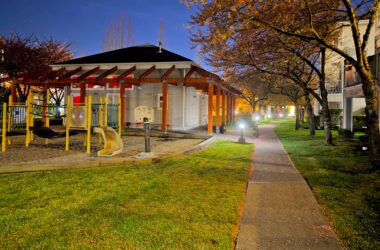
Our complex is now about 30 years of age. Typical furnace lifetimes are 15-20 years. Fortunately, our properties included what was, at the time, the Cadillac of furnaces. But even so, these units are coming to the end of their lifespan.
Owners may choose to replace their furnace with another gas furnace, or to go for a heat pump. You may be wondering what the difference is and whether a heat pump actually makes sense for our townhomes.
Although our furnace was still going strong, I knew that it was coming to the end of its life. We have always taken good care of the furnace, having it inspected every year and regularly replacing the filters. Despite that care, I estimated that we had at most another 2-5 years before it would need replacing.
A new furnace could cost around $15,000. Heat pumps are typically another $10,000 or more. Either way that’s a significant sum of money, and a furnace would not enhance the property value as much as having a heat pump installed. I also liked the idea that a heat pump could potentially keep our place cool in the summer, while a furnace only provides heat. As someone who works from home, a comfortable environment is important. So I began to look more closely at heat pumps.
Two main issues
I had two primary concerns:
- Would a heat pump really save money, like everyone claims?
- Would we be warm enough on cold winter days, and will a heat pump actually provide significantly cooler air on the hot summer days?
I researched both those issues quite extensively. In the past, when heat pumps were still new, it was common to install a dual-fuel heat pump to ensure that the gas furnace technology could still provide heat for cold weather.
Over the past couple of years that need has pretty much gone away. All-electric heat pumps have gotten better and are now commonplace. In areas like the Lower Mainland of BC, where we rarely get temperatures below zero, an electric-only heat pump can provide all the heat we need, capable of heating the home to 22 or 23 degrees without any problem.
For hot days, the primary issue is that the third floor is so high that pushing cold air all the way to the top vents requires a bit of extra power. In a townhome complex like ours, we need to limit electrical consumption because the transformer supplying the complex only has so much power and it dates back to electrical needs from 30 years ago. That’s why our bylaws limit the MOP (Maximum Over-Current Protection) to 30 amps. This means we can’t install larger 3-ton units. As a result, I wasn’t sure if the top floor would get enough cool air, but all the other info I received convinced me that a heat pump would be a valid choice.
Government rebates
BC Hydro is offering significant rebates at this time, which made it easy to think about making the change now rather than later. Rebates like this only last until the money runs out, and until the government decides enough momentum has been created. I didn’t want to wait too long.
Choosing a vendor
I looked at various vendors. There are lots to choose from and most of them have a good reputation. I was interested in aesthetics, wanting an outside unit that didn’t look like ugly gray industrial machinery. In the end, I chose Jetson. They are fairly new to BC, but are well established in Denver, with a solid reputation for quality. They make good use of the latest technology to streamline operations and equipment, and have a long-term maintenance option for a small monthly fee. They also offered an additional $5,000 discount because they are new to the province. Combined with the government rebate, and additional incentives, we ended up paying around $5,000 total to switch our furnace out.
Single day installation
After the Strata Council reviewed and approved the installation, Jetson came and did everything in a single day, including the concrete pad for the outdoor unit. They took our furnace and cleaned everything up beautifully. They were able to handle the wiring and piping through the ceiling of the downstairs space without cutting any holes. They did a very clean job of the outside pipes. Overall, the aesthetics are great. The team seemed genuinely interested in ensuring a clean, well organized installation.
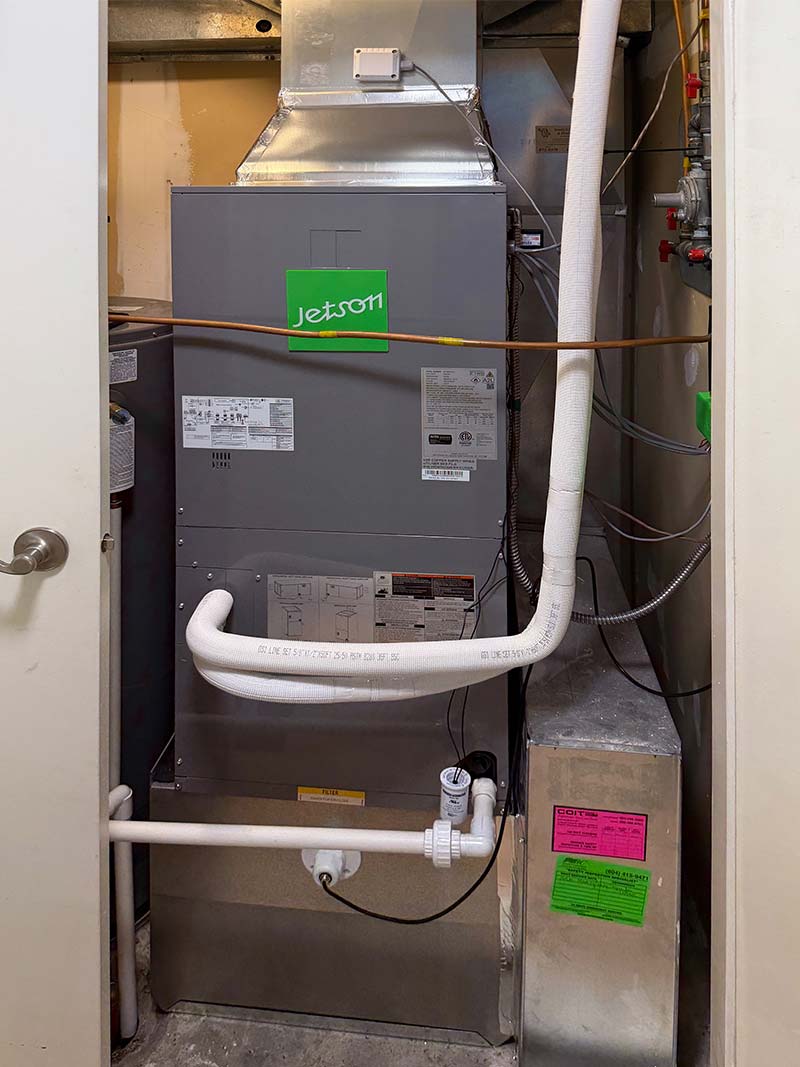
They had to cut part of the wall under the electrical box in order to connect the wiring to the panel. We’ll get our painter to come in and clean that up, a small additional cost.
The only part I was disappointed in was losing my beloved Google Nest thermostat, which I had recently upgraded at a pretty hefty price. But they promised that they are looking for a way to make their system compatible and when that happens they said they would come back and swap out the thermostat at no additional cost.

How well does it work?
Now that we’ve had it in place for a couple weeks, I can say that overall using a heat pump has met my expectations. We’ve had a few really hot days and it kept our main floor nice and cool. In fact, we’ve even had to turn the temperature up a degree or two because it felt too chilly!
The mobile app lets you set schedules for sleep times and away times, like when you’re at work with nobody home. You can also change the mode or temperature remotely.
However, it did confirm for me that the top floor, being so far above the location of the main unit, does not get a lot of cool air, even with the fan on full speed. It’s just too much distance to drive that air flow. While it does get cooler than before, on hot days it’s still just a wee bit warmer than we like for a comfortable sleep. We like it around 18 degrees at night. The best we can get with the heat pump is 19 or 20, and on hot days maybe 21 degrees on the top floor. As a result, we’ve kept our AC unit in place in the upstairs bedroom. But that’s a minor issue overall. The living room is nice and cool on those hot days. I have no concerns about cold weather either, convinced that our heat pump will provide all the heat we need when those days come.
Slower temperature changes
One thing that I didn’t realize before installation is that heat pumps do not change your temperature as quickly as a furnace will.
With a gas furnace, if you come into a cold home, you can set the desired temperature and within 20 minutes it will get there.
With a heat pump, a large temperature difference can take 2-3 hours to be achieved. These systems are designed to be energy efficient, and they don’t drive super hot or freezing cold air. The differential is smaller, so changes take time. You need to plan ahead. But at the same time, it’s much more efficient so you are actually better off to keep the difference between your “home” temperature and your “away” temperature to a couple of degrees. With a gas furnace, we would set the away temperature down to 16 and the home temp (in the winter) to 22 or 23. That’s a huge difference and made the most sense for gas powered heating. With a heat pump, just 2-3 degrees is actually more efficient than forcing a major temperature change.
Will it save money?
Everything I’ve read so far suggests that a heat pump probably doesn’t save money. Yes, the gas costs go down in the winter, but the electrical costs go up a bit year round, so it is most likely a wash. I won’t know for sure if there are financial benefits until the end of winter when I compare the budgets from then vs now. But I believe it’s a great investment because a heat pump does enhance the overall value of the home and provides the cooler summer temps in the home. Since I work from home, that’s golden!
Remember to get permission first
If you’re considering a heat pump, now is the time to act because those huge rebates will end before too long.
Remember that you MUST get Strata Council approval before you install a heat pump. Without that approval, you will face a fine for bylaw violation. There are important considerations that council needs to know are being followed to protect the other owners. You can download the heat pump guide and the application from the C21 owner portal or from this download link.
This post is also available in: